
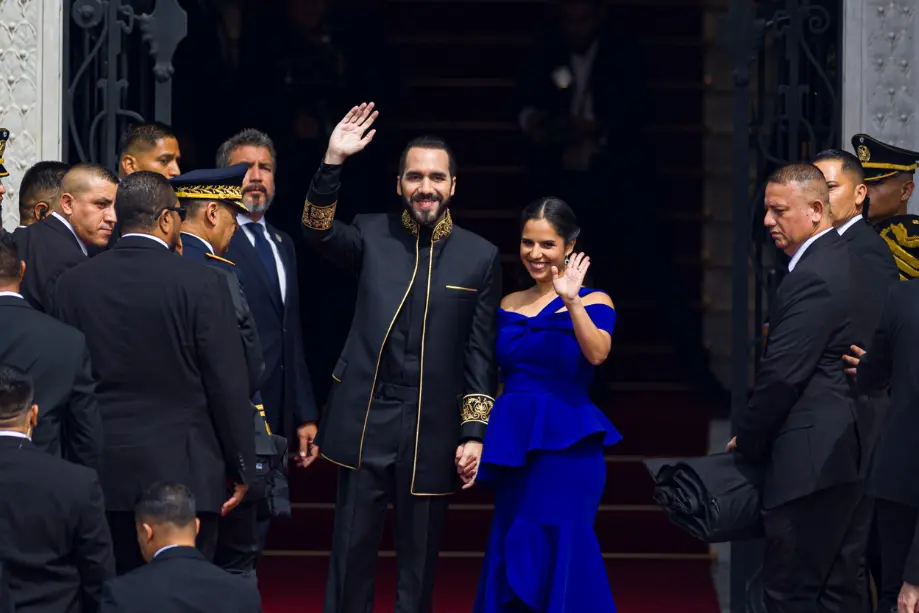
Re-election in other countries often means the continuation of negative circumstances (out of respect, we prefer not to name specific countries), but in El Salvador, re-election means continuing the good—preserving the progress and achievements the country has made.
It brings stability and a sense of relief not only to Salvadorans, but also to both local and foreign investment.
With the recent approval of indefinite presidential re-election and the extension of the presidential term to six years, President Nayib Bukele’s ability to remain in office offers El Salvador something the nation deeply needs: stability.
For a country that has endured decades of violence, political volatility, and economic fragility, this new direction provides not only continuity, but also a renewed sense of long-term confidence.

What Comes After Bukele? A Silent Fear Now Eased
For many Salvadorans, a quiet question has haunted the public conversation for years: “What happens after Bukele?” This fear—rarely spoken out loud—reflected deep anxiety that the country’s major advances, especially in public safety, could be quickly reversed if a hostile or ideologically extreme government came into power.
These concerns were not unfounded. In the Legislative Assembly, opposition figures have made troubling statements. César Reyes, a deputy from the ARENA party, declared: “Once they lose power, the prison doors will open,” referring to those who supported the massive crackdown on gangs.
Likewise, Deputy Claudia Ortiz became known for exclaiming “Free them now!”, a phrase used to advocate for the release of so-called “innocents” but widely interpreted as a veiled attempt to free convicted gang members.
The two previous examples are just some of the most notable ones, as the so-called ‘opposition’ in El Salvador has not only implied such intentions between the lines, but—as seen in the examples above—they have also spoken openly and without hesitation about what they truly intend to do.
In this context, the possibility of Bukele’s continued leadership is not just a political shift—it is a collective sigh of relief for a population that knows what’s at stake.
Safety, Investment, and Economic Stability
Beyond security, Bukele’s administration has created a climate of economic certainty. The president is openly supportive of entrepreneurship, private investment, and innovation. His pro-business stance has made El Salvador more attractive to both local entrepreneurs and foreign investors.

With indefinite re-election now possible, investors no longer have to fear a sudden ideological shift. There’s reassurance that a leadership hostile to private enterprise—such as one rooted in socialist or globalist ideas—won’t suddenly derail years of effort and growth.
This sense of continuity is essential for countries seeking to build serious long-term economic strategies. And now, El Salvador offers that rare foundation.
El Salvador as a Regional Reference
Interestingly, El Salvador is beginning to set the pace in key areas that matter to modern nations. Just days after the news of Bukele’s potential indefinite re-election became international headlines, discussions around similar possibilities began gaining traction in other countries.
In Argentina, for example, there is growing conversation around the idea of President Javier Milei seeking another term to continue his bold national project. While it’s unclear if Argentina will follow through with any legal changes, the timing is notable.
Just like with security—where El Salvador became a global case study in gang control—Bukele’s re-election path is now prompting other nations to take notes and consider adapting similar approaches in their own political systems.
El Salvador, once overlooked or dismissed, is increasingly seen as a nation that dares to lead when others hesitate.
If God Wills It — A Future of Peace and Direction
At the heart of these developments is a simple hope: that El Salvador continues on the path of peace, development, and national dignity. In these uncertain times, the clarity and continuity offered by Bukele’s re-election feels like more than a political maneuver—it feels like a divine opportunity to solidify a better future.
If God wills it, El Salvador may enjoy many more years of responsible leadership, security in its streets, and stability in its economy.
Please follow us on X!
Follow @ElSalvadorENx