
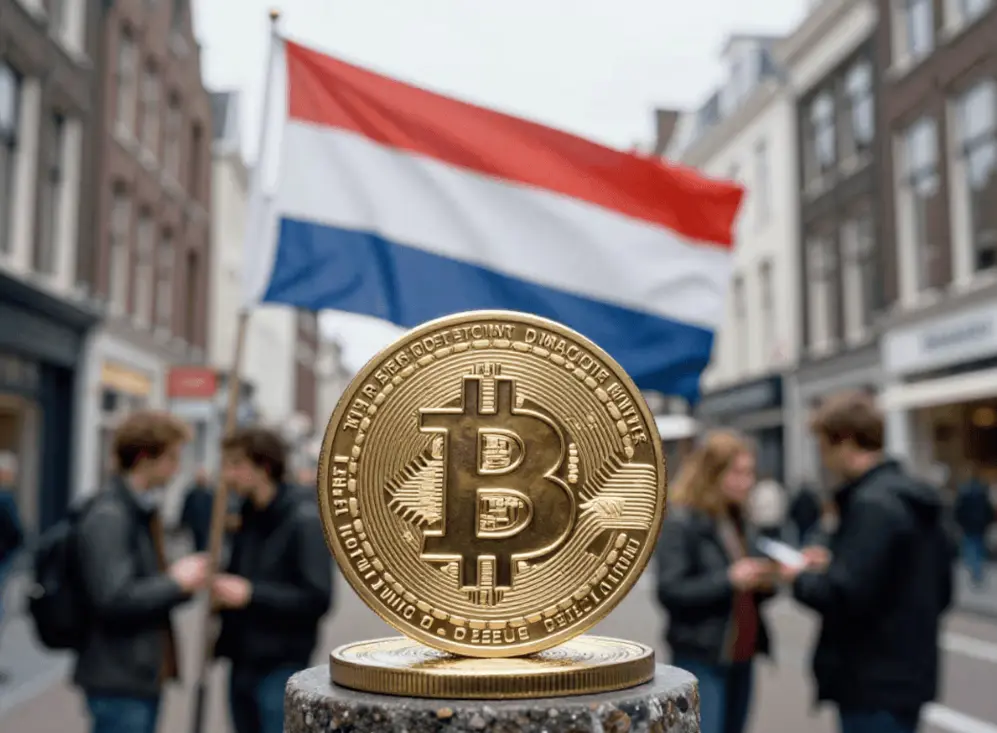
Let’s be clear from the start:
This is not a claim that El Salvador is the best or only option for everyone affected by recent Dutch tax reforms on digital assets.
Every individual has different needs, constraints, family situations, business structures, and risk tolerances.
That said, El Salvador is a country that deserves serious attention from Dutch investors who are being impacted by laws that tax unrealized gains and penalize long-term asset holders.
1. A Fundamentally Different Approach to Bitcoin and Digital Assets
El Salvador does not tax Bitcoin capital gains and does not impose taxes on unrealized gains. This alone places it in sharp contrast with the Netherlands’ upcoming framework.

The difference is not ideological marketing — it is structural:
- no forced liquidation to pay taxes on paper gains,
- no annual revaluation tax pressure,
- no assumption that asset holders always have liquidity.
For long-term investors, this matters.

2. Legal Clarity Instead of Policy Volatility
While Europe increasingly treats digital asset holders as a fiscal risk to be managed, El Salvador has opted for clear and stable rules.
This does not mean “no rules.”
It means predictable ones.
For capital planning, predictability is often more valuable than perfection.

3. Geographic Distance as a Strategic Advantage
Being far from Europe is not just a lifestyle change — it can be a risk-management feature.
El Salvador is geographically removed from the political and military fault lines that have shaped Europe’s most turbulent chapters of the 20th century — chapters in which this country remained outside the conflict sphere.
In an era of renewed geopolitical uncertainty, distance can matter.
4. Public Security Has Improved Dramatically
It would be dishonest to pretend El Salvador’s past does not exist.
But it would be equally dishonest to ignore the reality of today.
Public security has improved significantly in recent years, to the point where everyday life, business operations, and mobility look very different from a decade ago. This has been a key factor in renewed foreign interest, tourism, and local economic activity.
Security is not perfect — nowhere is — but it is no longer the structural deterrent it once was.

5. Openness to Foreign Capital, Without Illusions
El Salvador is not a utopia, and it does not pretend to be one. Infrastructure, bureaucracy, and institutions are still evolving.
What it offers instead is coherence:
- capital is not treated as an enemy,
- asset ownership is not punished preemptively,
- long-term holding is not financially strangled.
For investors coming from a system that taxes unrealized asset appreciation, El Salvador represents a fundamentally different approach.

Final Thought
We are not saying El Salvador is the right choice for everyone.
We are saying that ignoring it would be a mistake.
For Dutch investors affected by taxes on unrealized gains and increasingly aggressive asset policies, El Salvador represents:
- an alternative legal philosophy,
- a different relationship between state and capital,
- and a jurisdiction that competes by attraction, not pressure.
In a world where capital is mobile, countries compete whether they admit it or not.
The Netherlands has chosen one path.
El Salvador has chosen another.
It should be on your radar.
Please follow us on X!
Follow @ElSalvadorENx