
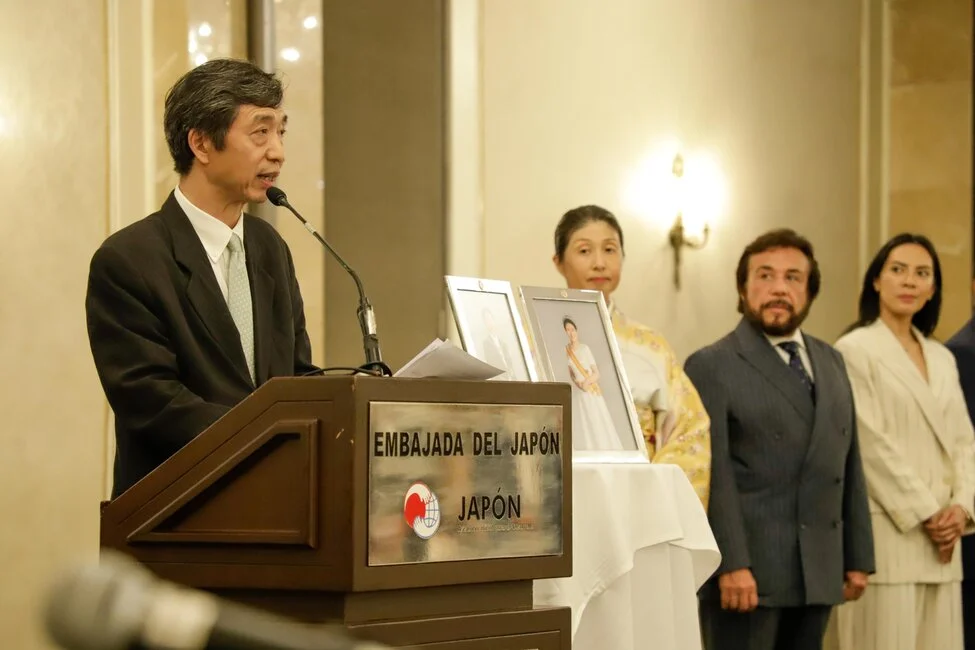
On February 19, 2025, the Japan Embassy in El Salvador hosted a vibrant National Festival to commemorate the Japan’s National Foundation Day. This event not only celebrated a cherished Japanese tradition but also highlighted the 90-year friendship and robust cultural and diplomatic ties between Japan and El Salvador.
Japanese Ambassador Yoshitaka Hoshino, who led the festivities, underscored the deep-rooted connection between the two nations.
In his address, he stated, “El Salvador now lives in the sensation that the Japanese once had and that they have now lost, that is, ‘tomorrow will be better than today.’ This is exactly the conviction that Japan wants to recover, and the conviction that we can experience here in El Salvador. After 90 years of friendly relations, Japan can learn from El Salvador.” (translated literally).
His words captured the spirit of optimism and mutual learning that has long defined the relationship.
You might also like: Safest country in the western hemisphere
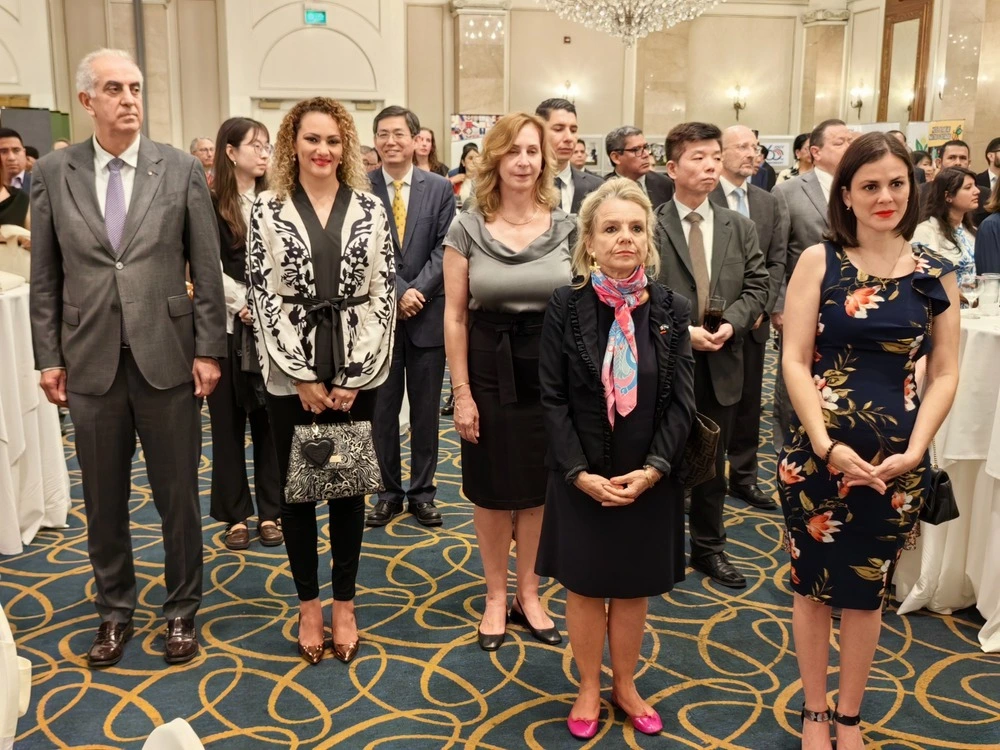
The celebration drew a distinguished audience, including high-ranking Salvadoran officials such as Vice President Félix Ulloa, as well as ambassadors from different countries. Notably, the Chinese ambassador to El Salvador was among the invited guests, reinforcing the international recognition and respect for the enduring ties between Japan and El Salvador.
A key highlight of the event was the acknowledgment of El Salvador’s pioneering role in international cooperation.
In a historic milestone, El Salvador became the first country in Latin America and the Caribbean to accept volunteers from the Japan International Cooperation Agency (JICA). These first JICA volunteers from Japan arrived in El Salvador in September 1968 and began working in vital areas such as education, health, community development, the environment, and sports.
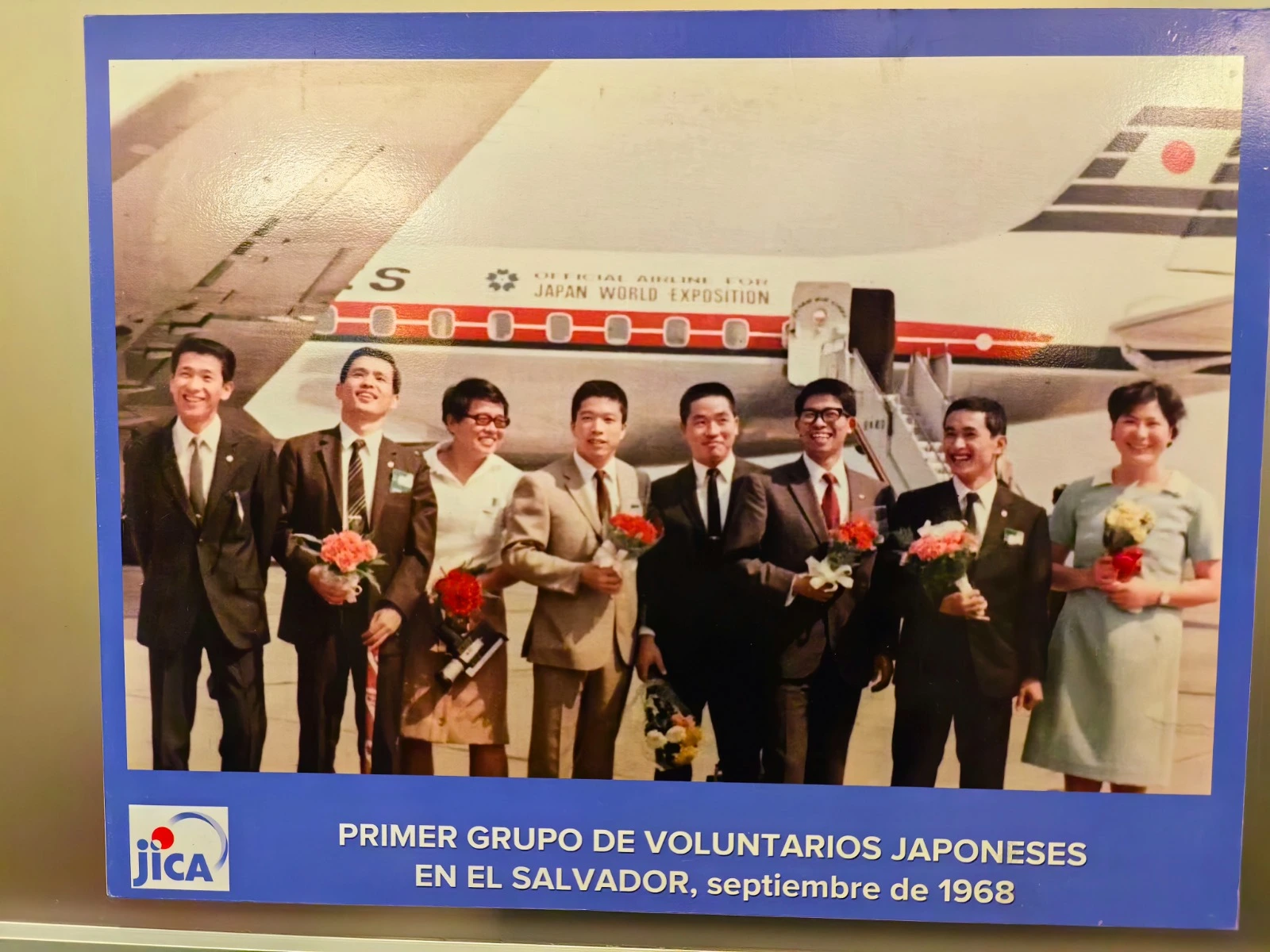
Today, 30 JICA volunteers continue to contribute significantly to the country’s development, a legacy that started more than five decades ago.
As an additional note, a few years ago, there were JICA volunteers who taught Japanese language classes in person. Currently, as far as I know, JICA no longer offers Japanese language classes in El Salvador.
In addition to the celebrations, the event touched upon recent national progress. It was noted that, in December of the previous year, the Gerardo Barrios Peripheral Road was inaugurated in San Miguel in the presence of President Nayib Bukele, and the ESMATE program was launched to enhance the national education curriculum.
These developments illustrate El Salvador’s ongoing transformation—a process that Japan is eager to support by aligning with the nation’s innovative initiatives.
Amidst the celebrations, Ambassador Hoshino addressed a significant challenge facing Japan—the rapid decline of its working-age population. He highlighted that over the next 20 years, Japan’s working-age population (excluding the elderly and children) is expected to decrease by 15 million, a figure more than double the entire population of El Salvador.
This demographic challenge adds a layer of introspection to the celebration, emphasizing the contrasts and learning opportunities between the two nations.
El Salvador’s rate is about 16–17 births per 1,000 people, reflecting moderate growth and a youthful demographic. In contrast, Japan’s rate is only around 6–7 births per 1,000, contributing to its rapidly aging population. This disparity highlights the distinctly different demographic challenges each country faces.
Some photos in this post were found on diarioelsalvador.com.
Please follow us on X!
Follow @ElSalvadorENx