
The question of how El Salvador transformed from one of the world’s most dangerous countries into a remarkably safe nation is complex. It’s a story that spans decades, involving deep-seated gang structures, controversial policies, and a decisive government crackdown.
To understand the present, we must first look at a painful past.


A Legacy of Violence: From Civil War to Transnational Crime
El Salvador’s modern struggle began long before the recent headlines. The nation endured a bloody Cold War-era civil war, a proxy conflict where global powers like the United States and the Soviet Union used the country as a chessboard. The aftermath left a fractured society.
From the ashes of that conflict, gangs began to form in the 1990s. What started as local groups of troubled youth evolved into sophisticated, transnational criminal structures—MS-13 and Barrio 18.
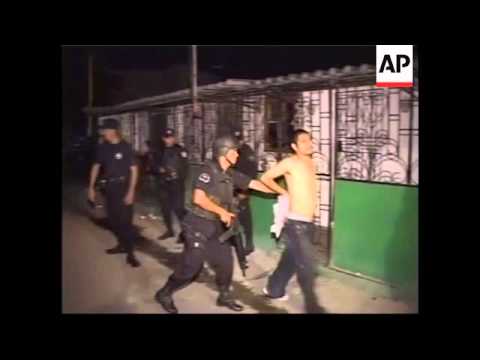
Over the decades, these gangs were responsible for the murders of over 200,000 Salvadorans, holding the nation hostage through extortion and terror.


As Minister of Public Security, Gustavo Villatoro, has pointed out in interviews, a critical factor in this escalation was international pressure in the 1990s.
El Salvador, like other Latin American nations, was forced to adopt legal reforms that, while framed as progressive, were in practice “perverse laws” designed to give criminals an advantage, leading to a surge in violence.

The Turning Point: A Spiritual Recognition and a Political Decision
For years, the situation seemed uncontrollable. Then, in March 2022, a single weekend of extreme violence—a coordinated massacre by the gangs intended to terrorize and pressure the government—became the catalyst for change.
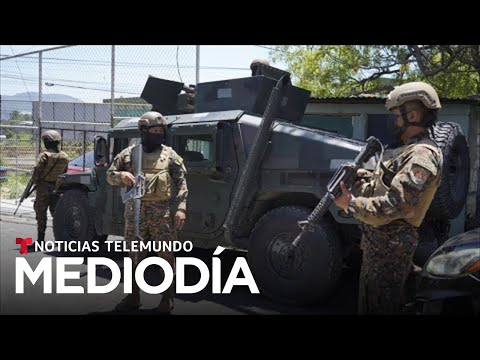
President Nayib Bukele, alongside key figures like Minister Gustavo Villatoro, Defense Minister René Merino Monroy, and the National Police Director, recognized the situation was spiraling.
In a revealing interview with Tucker Carlson, Bukele stated they acknowledged the problem was not just physical but also spiritual. After praying for guidance, they made a historic decision.
The “Regimen de Excepción”: A Controversial Strategy for Peace
The government’s response was the implementation of a State of Exception (“Régimen de Excepción”). This special regime suspended certain constitutional rights, allowing for mass arrests.
Due to the years of intelligence gathering, the police already had detailed profiles of tens of thousands of gang members.
The security forces—both police and soldiers who had been patrolling the streets for nearly two decades—didn’t need to start from scratch. They simply went to their homes and arrested them.
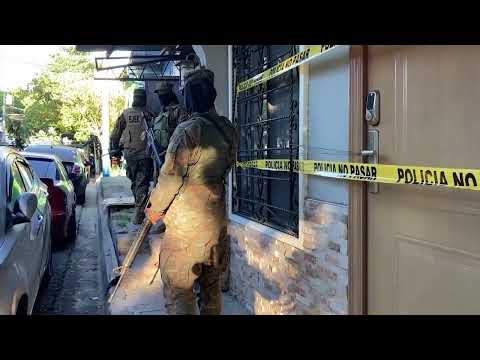
The operation was sweeping:
- Anyone with gang-related tattoos was detained.
- Mass raids targeted known gang strongholds.
- Citizen tip-offs were aggressively pursued.
This is also why the Salvadoran government takes a hardline stance today. Under Salvadoran law, gangs are legally designated as terrorist organizations.
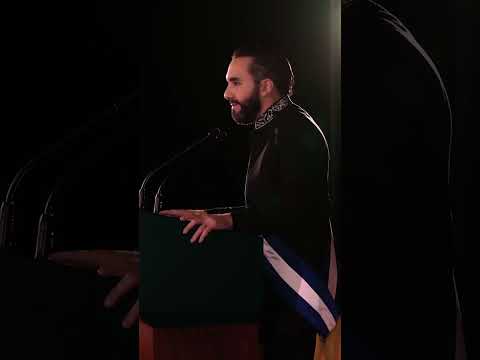
Therefore, the government’s position is that it is far more cost-effective—in both human and economic terms—to prevent a child from becoming a gang member and to judge any aspirant “gangster” for terrorism, than to allow the tragic cycle of the past to repeat itself.

A New Chapter
The “Régimen de Excepción” remains a topic of intense international debate regarding human rights. However, its impact on public safety is undeniable for most Salvadorans. The streets, once ruled by fear, are now open to families and businesses.
El Salvador’s journey to safety was not an overnight miracle. It was the result of a government’s drastic decision to confront a spiritual and criminal crisis head-on, using pre-existing intelligence to dismantle the terrorist structures that had plagued the nation for a generation.
The story of how El Salvador became safe is the story of a nation deciding it would not let its history dictate its future.
A Note on This Explanation
It is important to acknowledge that this overview provides a simplified, high-level account of a deeply complex and multifaceted situation.
While we have focused on key events and details we believe are crucial for context—such as the historical roots of the violence, the impact of certain international policies, and the specific governmental response—this narrative is not exhaustive.
Numerous other social, economic, and political factors have played significant roles in El Salvador’s journey. This brief explanation aims to highlight essential points that should not be overlooked, but it is not a complete historical or analytical record.
Please follow us on X!
Follow @ElSalvadorENx