
In recent months, it has been mentioned more than once that some Honduran business owners and companies are seriously considering relocating their operations to neighboring El Salvador.
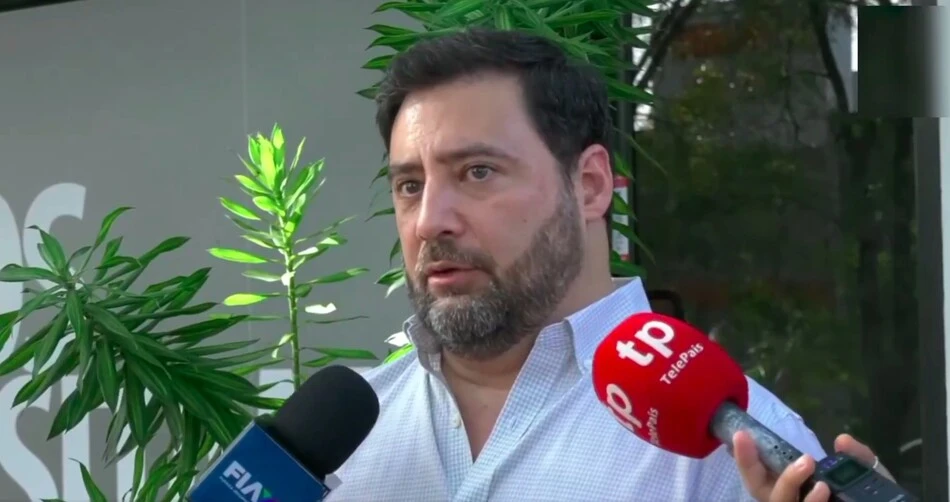
The trend gained public validation when prominent Honduran businessman René Bendaña stated months ago to national media that Honduras’ deteriorating conditions made moving his company to Salvadoran territory more than an interesting option.
Bendaña’s initial disclosure was particularly revealing. The grid couldn’t supply the energy needed for new equipment, he explained, emphasizing this wasn’t merely about inconvenience but a fundamental barrier to growth.
Compounding this was Honduras’ higher electricity costs, which – as corroborated by recent data – remain elevated compared to El Salvador’s rates.

Escalating Frustrations
Months after Bendaña’s first statements, follow-up interviews confirm no improvement. Simultaneously, new voices have emerged – like a Honduran attorney representing multiple corporations – detailing acute operational crises:

- Property Invasions: Over 160 documented land invasions occurred in the first half of this year alone, with businesses receiving no state protection despite legal ownership.
- Legal Vacuum: Honduras’ weak legal framework and governmental indifference leave companies vulnerable. The attorney stated that the State does not care.
- Security Failures: Criminal activity compounds operational risks, with companies lacking basic public safety assurances.

The Salvadoran Proposition
Recent statements from Bendaña provide granular contrast between the two nations’ business environments:
1. Energy Reliability & Affordability
El Salvador’s grid delivers consistent, high-quality power – a non-negotiable for industrial operations. Its national energy matrix isn’t merely stable; it boasts surplus capacity, producing double domestic consumption according to ETESAL’s president.
Future-proofing is already underway through the thorium nuclear plant project, designed to reduce weather-dependent hydro volatility. Critically, Salvadoran industrial electricity costs $0.12 per kWh (that price was mentioned by Bendaña at the time of his interview) – a decisive advantage over Honduras’ higher rates.
2. Legal Security
Businesses cite enforceable property rights and judicial predictability as foundational. Unlike Honduras, Salvadoran institutions actively protect investments.
3. Accessible Capital
Honduras’ lending environment has deteriorated severely. As Bendaña notes, some banks aren’t issuing loans due to election uncertainty, while approved loans carry exorbitant 19-21% interest rates. El Salvador offers competitively priced financing essential for operations and upgrades.
4. Growth Optimism
Beyond infrastructure, companies report a tangible culture of possibility in El Salvador – a stark contrast to Honduras’ stagnation.
Political Uncertainty Amplifies Risks
Honduras’ governance climate exacerbates these challenges. The rise of the socialist-aligned “Libre” party – openly affiliated with governments like Cuba and Venezuela – has injected profound anxiety into the private sector. Upcoming elections intensify concerns about policy volatility, especially regarding:
- Property rights enforcement
- Energy sector management
- Fiscal and monetary stability
This political dimension merges with existing structural weaknesses to create a perfect storm of uncertainty.
Nuanced Realities in El Salvador
- Public Security: Once critical, violence has decreased substantially through sustained efforts.
- Investment Climate: Purposeful reforms – both large-scale and incremental – have improved business facilitation.
- Economic Momentum: Pro-growth policies under President Nayib Bukele have enhanced investor confidence.
Crucially, these advancements directly address Honduran businesses’ most urgent pain points.
Why Relocation Gains Traction
The calculus is increasingly straightforward:
| Operational Factor | Honduras | El Salvador |
|---|---|---|
| Electricity | Unreliable supply Higher costs | Grid stability ~$0.12/kWh industrial rate |
| Legal Protection | Weak enforcement 160+ land invasions (january-june 2025) | Enforced property rights Judicial predictability |
| Financing | Loans at 19-21% Credit freezes | Competitive interest rates Accessible capital |
| Political Climate | Election uncertainty Socialist governance concerns | Policy consistency Pro-business orientation |
For companies like Bendaña’s, this isn’t theoretical. It translates to:
- Avoiding production-halting blackouts
- Securing facilities against invasions
- Financing equipment at sustainable rates
- Planning beyond political turbulence
The Broader Implications
This trend signals a quiet regional realignment. Honduras risks losing:
- Job-creating enterprises
- Tax-generating operations
- Industrial expertise
Meanwhile, El Salvador leverages:
- Energy surpluses as economic development tools
- Security gains as business enablers
- Legal reforms as trust-building measures

Conclusion: Pragmatism
As Bendaña recently reiterated, the relocation consideration stems from hard operational realities. Honduras’ unresolved electricity instability, restrictive financing, and political uncertainty collectively undermine business viability.
El Salvador’s proposition offers actionable solutions: reliable infrastructure, enforced contracts, accessible capital, and policy stability. For Honduran businesses, this isn’t about abandoning their homeland; it’s about securing their survival in a region where operational conditions increasingly dictate geography.
The question now isn’t whether companies will move, but how many will reach the same conclusion as Bendaña: That El Salvador is a strong option for relocating factories and production companies due to the favorable conditions it offers. Businesses can benefit from El Salvador’s advantages while remaining close to Honduras—allowing them to produce in El Salvador and continue selling in Honduras.
Please follow us on X!
Follow @ElSalvadorENx